
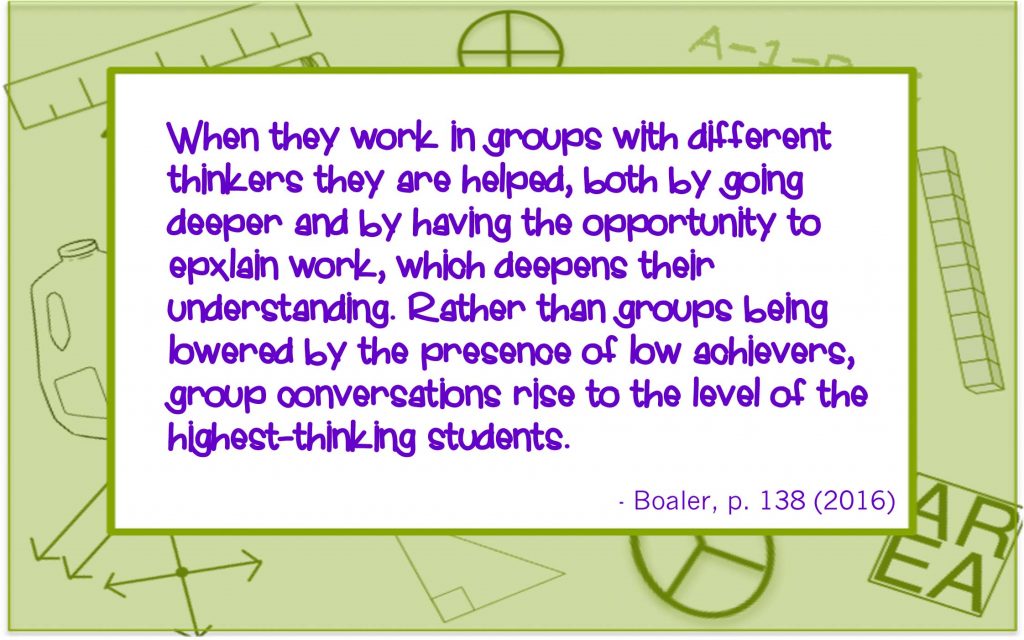
Students need to learn to work effectively in groups, with a variety of people. As professional adults, we have been in groups and teams that reflect a range of skills and we are tasked with working together. This is an important skill and desirable trait for employers. Students need plenty of opportunities to work together. In a classroom setting, students need chances to learn with a variety of learners. It’s not fair to always be with the “low” group, or with the “slow” group.
My Big Takeaway
We are learning together. We are responsible for each other’s learning. My goal is to teach students how to work well together.
Two Tips for me to encourage growth mindset group thinking
1. Establish group norms
Include students on a discussion on what they like and don’t like about working with others. Create guidelines that evolve that reflect how to work together efficiently and effectively.
2. Provide group projects
Math is rich with real life experiences, including group projects. I like to introduce projects before teaching concepts and procedures. I find that a project provides an experience that the concepts and finally procedures grow from. I noticed that if I teach in reverse order: procedures, concepts, then project, my students retain less and as a result can’t build new knowledge on it. For example, to “kick-off” learning about perimeter, I create teams (choosing random), and each team is a fencing company that needs to create a bid for three pools in an apartment complex. I am the apartment manager and the teams can arrange appointments with me to clarify the fence design I prefer, the location of gates, etc. This is all about measuring perimeter, with some essential money skills added in. There are also rich real-life skills, like asking good questions, having a firm hand-shake, meeting deadlines, and being on-time to appointments. My students take it seriously and they are extremely engaged.

Thanks for reading and let’s revolutionize math learning!